Puppy Education:
Puppy Education Home
Puppy Education Sitemap
Puppy Education About
Puppy Education Fundraisers
Puppy Education Donate
Puppy Education Wish List
Puppy Education Contact
Puppy Health:
Puppy Education First Aid
Puppy Education Puppy's Nutrition
Puppy Education Spay/Neuter
Puppy Education Dog Age in Human Years
Puppy Education Vaccines and Shots
Puppy Education Internal Parasites
Puppy Education External Parasites
Puppy Education Infectious Diseases
Puppy Education Genetic Diseases
Puppy Education Travel with your Puppy
Puppy Education Dog Pregnancy
Puppy Education Puppy Birth
Puppy Education Veterinary Visits
Puppy Behavior:
Puppy Education New Puppy
Puppy Education Basic Puppy Behavior
Puppy Education Puppy Taining
Puppy Education House Breaking
Puppy Education Socializing your Puppy
Puppy Education Aggression in a Dog
Puppy Education Human Bonding
Dog Breeds:
Puppy Education All Breeds
Puppy Education Sporting Group
Puppy Education Hound Group
Puppy Education Working Group
Puppy Education Terrier Group
Puppy Education Toy Group
Puppy Education Herding Group
Puppy Education Non-Sporting Group
Puppy Corner:
Puppy Education Lost and Found
Puppy Education Puppies for Sale
Puppy Education Puppy Names
Puppy Education Puppy Books
Puppy Education Puppy Insurance
Puppy Education Puppy Mills
Puppy Education Puppy Links
Puppy Education Puppy Ecards
Puppy Education Puppy Forum
Puppy Education Puppy Blog
Puppy Education Puppy Pictures
Puppy Education Puppy Movies
Puppy Education Puppy Wallpapers
Related Links:
Puppy Education LOlCatz
Puppy Education Kittenbaby.com
Puppy Education Animal Greeting Cards
Puppy Education Pet and Wildlife Forum
Puppy Education Rainbow Wildlife Rescue
Puppy Education Pet Abuse Database
Puppy Education Squirrel-Rescue

Critter Post Newsletter by MissDolittle


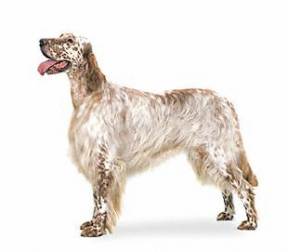
English Setter

English Setter


Height: 24-25 inches

Weight: 50-70 lbs.

Life Span: 12-14 yrs.

Breed Group: Sporting Dogs

Overview
English setters, the gentlest and sweetest of the setters, get along with adults, children, dogs, and other animals.

They do best in quiet households where they are considered important members of the family and are given regular exercise and playtime; they do not like to be left alone.

English setters may bark at strangers who come to the house but more as a greeting than a threat. English setters respond well to firm but patient and gentle handling, though their hunting instincts can make obedience training (which should be started early) difficult.

This dog thrives in the country, where it can get a lot of exercise.

Appearance
The English setter's flat coat is accented by abundant feathering. Coat color is black and white; black, tan, and white; lemon and white; orange and white; liver and white; lemon belton; orange belton; liver belton; blue belton; or solid white.

Grooming & Exercise Needs
The English setter needs to be brushed and combed three times a week and trimmed about three or four times a year. Long, brisk daily walks are essential.

Origins
The English setter was originally bred in the 16th century for bird setting and retrieving.

Special Alerts
The English setter is not suited for city or apartment life.

Breed-related health concerns: deafness, progressive retinal atrophy, hip dysplasia.


Reference: AKC - American Kennel Club


Puppy has Fleas - Puppy with Ticks - Heartworms - Worms - Parasites - Puppy Health - Puppy Diseases - Barking - Chewies - Walking - Sick Puppy - Parvo - Bottle-feeding - Puppy Names - Puppy Training - Puppy Potty Training - Puppy Photos - Puppy Finder - Puppy Forum - Puppies for Sale - Senior Dogs - Puppy training - Puppyfind - Puppy finder - Puppy kibble - Puppy luv - Puppy House Training - skinny Puppy - Puppy potty training - newborn Puppy care - LOlCatz - The Dog Lady - The Mixed Breed Rescue - Forgotten Friends

Webdesign and Photos by SmilingPages.com in Support of the Rainbow Wildlife Rescue